Planting a forest requires a vision for what could be, sharp observational skills to see what works and dedication to an outcome that is greater than any individual. Of course, it also requires resources.
In 2024, Takatu LandCare member Clive Harrison made his first application to Auckland Council’s Waterway Protection Fund and was awarded a grant to assist with the purchase of 900 plants.
However, this isn’t where Clive’s story starts. In the 90s he was still working in Auckland and wanted to get out of the rat race. He bought a Whitmore Road lifestyle property near Matakana; one of five lots developed on a rundown farm.
Clive first saw the Tāwharanui Peninsula land in the middle of winter when it was blowing a gale and pouring with rain, but the tide was in, the property was surrounded by water and had some impressive native bush. Undeterred by invasive weeds, damaged fences or lack of road access, he decided the property was the right place for his vision. He proposed to the developer to alter the boundary of the lots and what started out as a six-hectare property, became the 12.2-hectare site Clive bought.
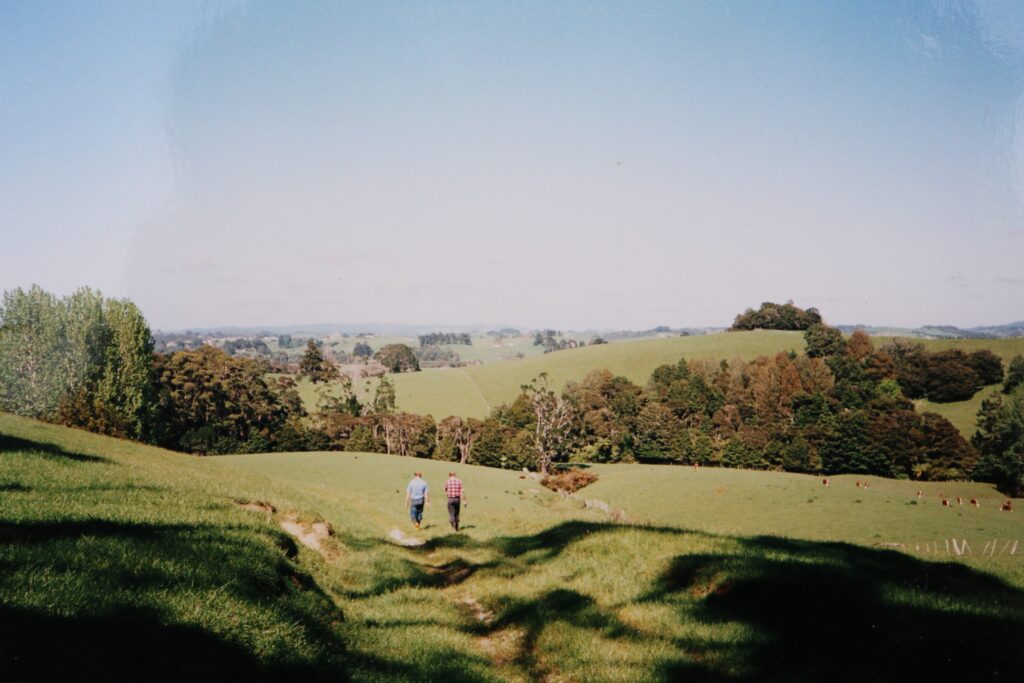
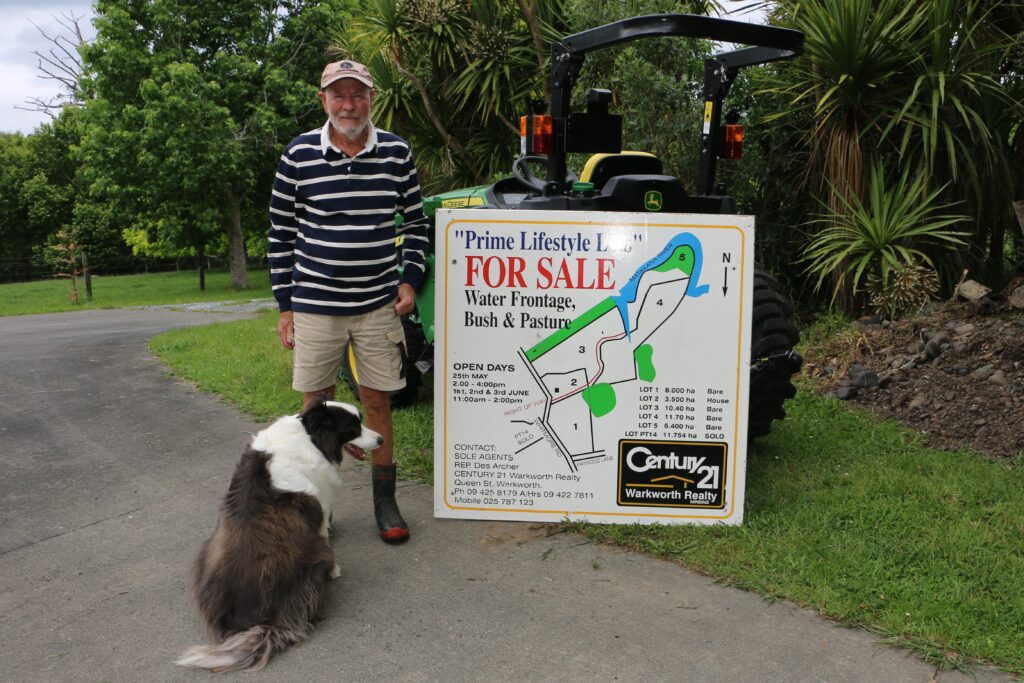
“I’d always had an interest in gardening and the bush,” says Clive. “First, I cleared out the weeds: scotch thistles as big as trees, woolly nightshade, fallen pines. It was a real mess.”
Stock had access to the remnant bush and there were plenty of possums. In the first year, Clive eliminated 95 possums with six Timms traps in a two-hectare bush block.
He was still working in paid employment and initially, he spent his weekends at the Whitmore Road property. Much of the regeneration work he did by himself, with friends helping now and then and contractors did the big work – forming a road and reinstating farm fencing to manage sheep.
Waterway Protection Fund
Throughout the years, Clive has contributed a significant amount of time and money to restore a healthy eco-habitat for native flora and fauna thriving throughout Tāwharanui Peninsula. Kauri planted by Clive nearly three decades ago are now more than eight metres tall.
In 2024, he received a letter from Auckland Council inviting him to apply to the Waterway Protection Fund (WPF) because his property is located within a priority catchment area, with freshwater flowing across his land and into Matakana River. Properties greater than five-hectares are considered eligible to apply to the WPF.
He completed a reasonably straightforward online application requesting funding for plants to improve water quality, reduce contaminant loss (nitrogen, phosphorus and sediment), provide habitat for wildlife and enhance aesthetic/amenity/landscape value/well-being/cultural and spiritual.
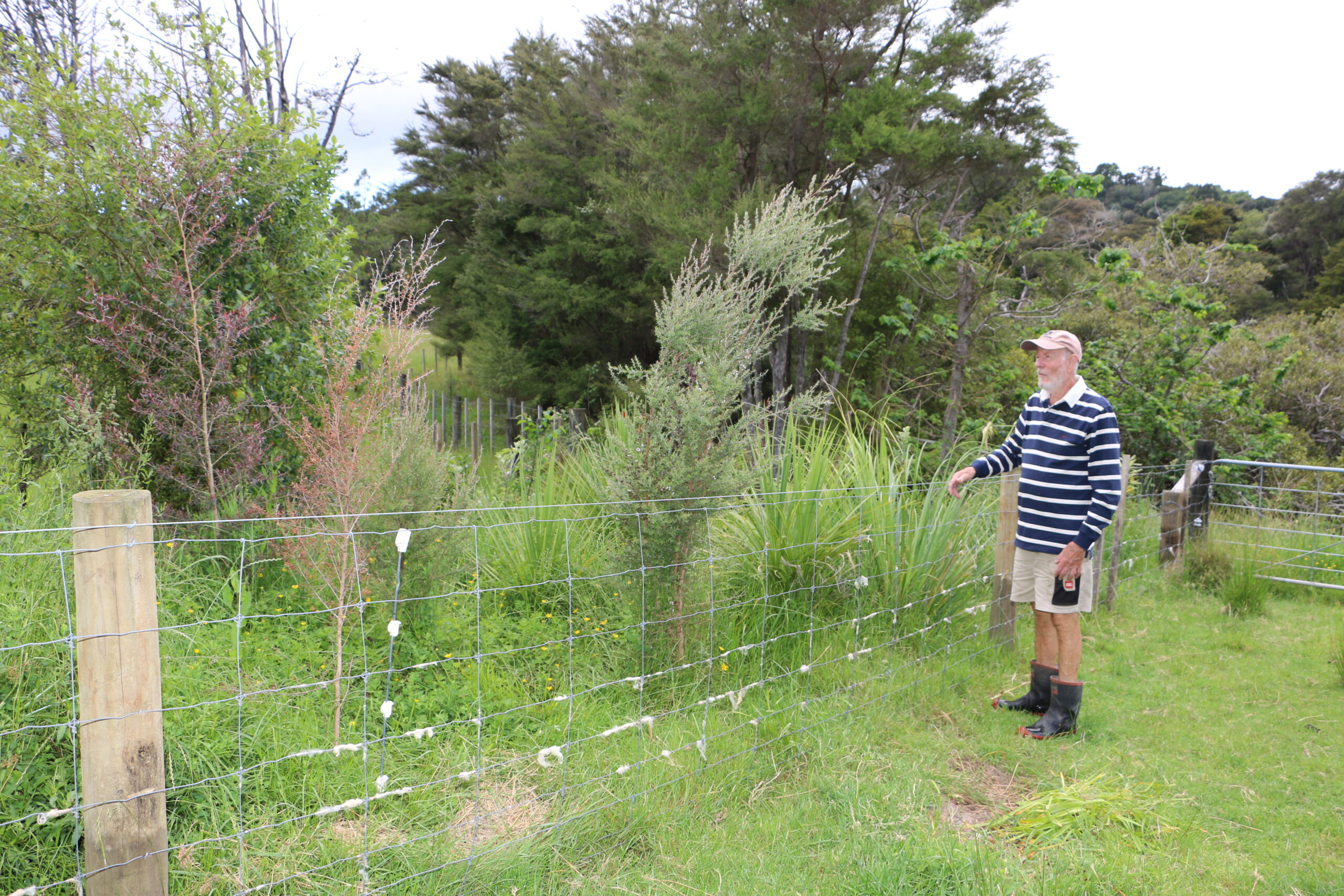
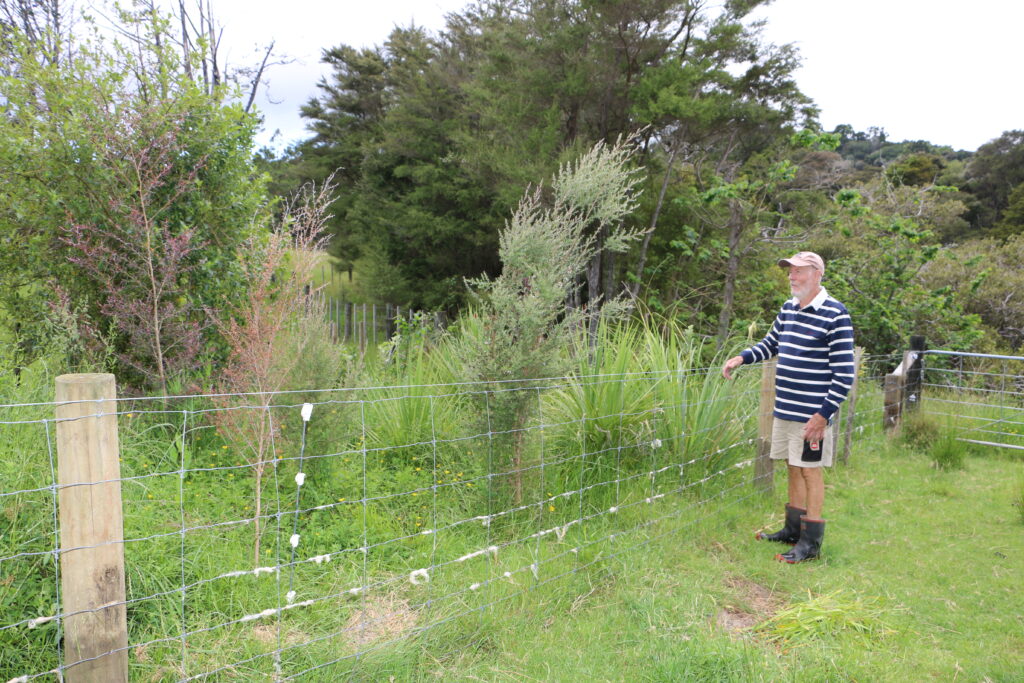
“I had decided to do riparian planting anyway and I’d already fenced it off,” says Clive.
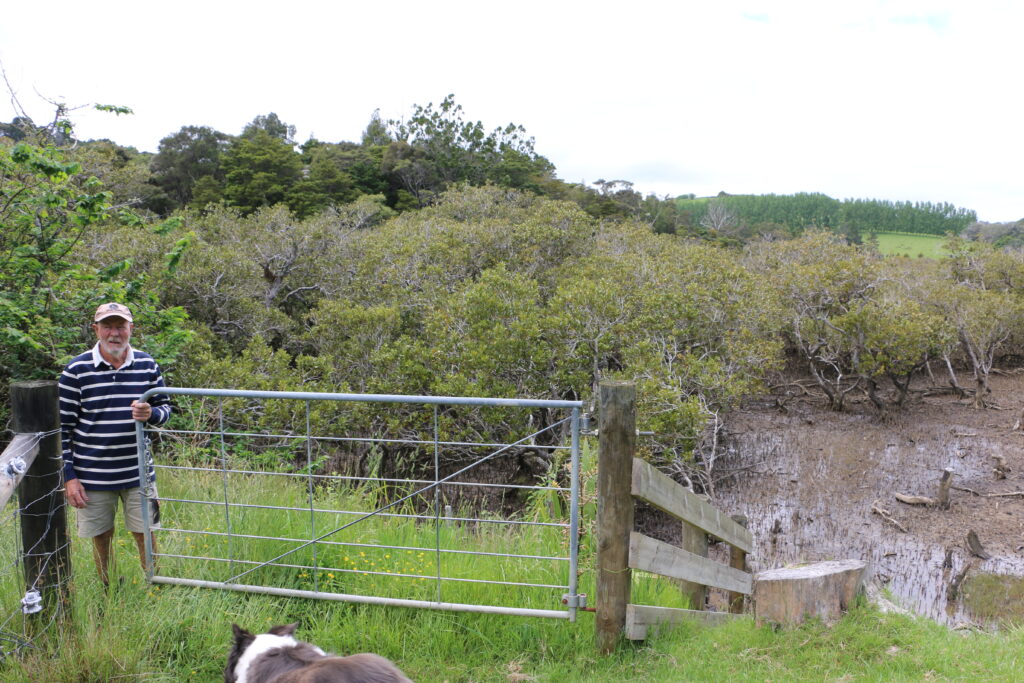
Clive recommends landowners investigate funding opportunities well before they start a project to ensure all costs are included. Currently, Auckland Council funds up to 50 per cent of the total project budget and landowners can contribute their half as in-kind labour, including the planting carried out by volunteers.
Applicants can request financial support for:
- plants
- fencing to exclude stock
- site preparation
- planting labour
- follow up plant releasing
- alternative water supply for stock
- fish passage restoration
Once Clive’s application made it through the first stage of the WPF assessment, a land advisor visited his site to design a more detailed plan and identify the boundaries of planting areas. Clive was involved at every stage and could negotiate the scope of the project.
A wetland was considered but this did not proceed. Restoration of natural wetlands requires a Permitted Activity Notice, which can be completed by Auckland Council advisors to assist landowners. The notice is closed when the wetland planting is completed.
The final project included funding to contribute to the cost of 900 plants and Clive requested some specific species.
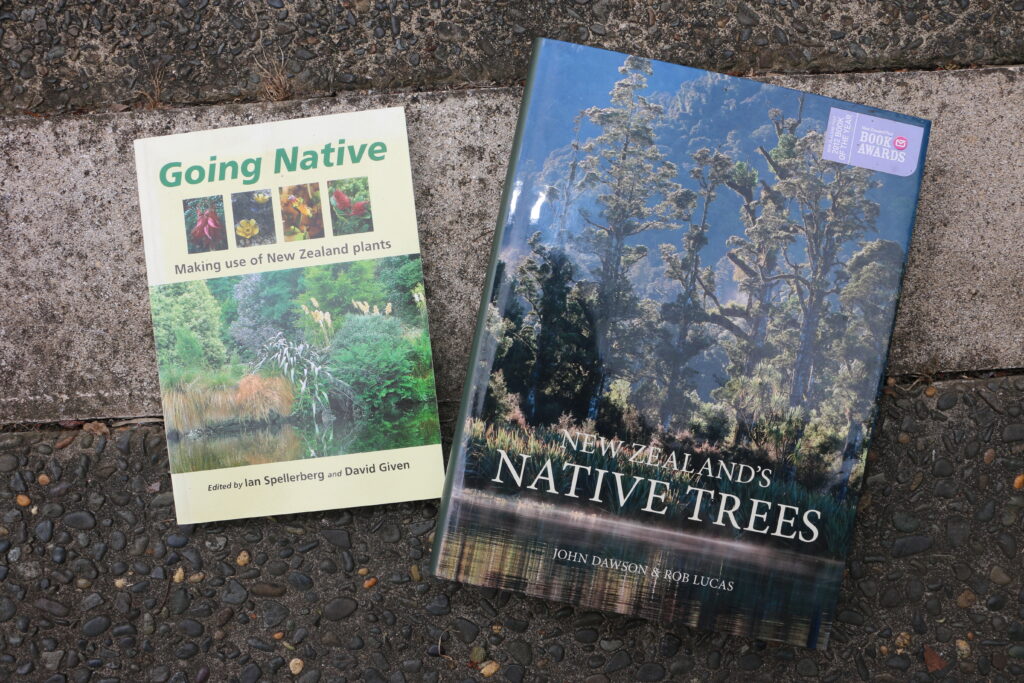
He referred to two books: New Zealand’s Native Trees, which he says is exceptional, and Going Native.
“I didn’t want a boring native planting with just mānuka and flax. I wanted to infill plant and needed some canopy trees: rimu, kauri and taraire.”
Clive Harrison
Site preparation and planting
Clive started clearing the site in the summer, ready for planting in May and June, 2025.
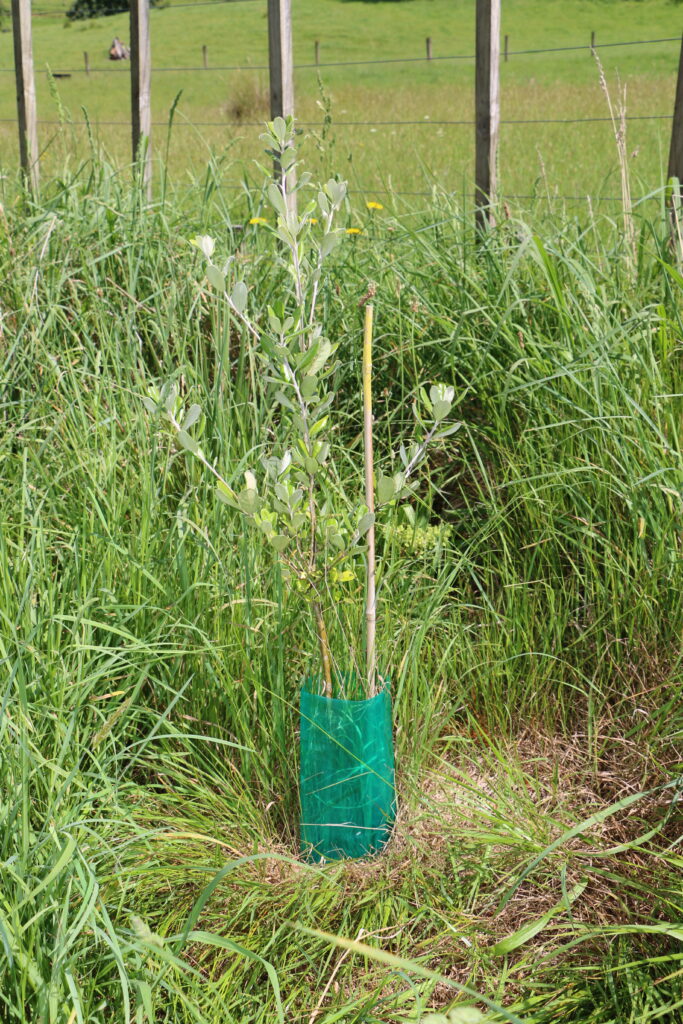
“The hardest bit was preparing the ground because it was pretty rough. It had been fenced off and the grass had grown up around my ears.”
Fortunately, Clive’s property doesn’t have kikuyu grass, which can smother many native plants, and there was no need to blanket spray the planting site. Instead, he cut back the grass with a weed eater and lawn mower and where necessary, he spot-sprayed about a metre apart. This also helped identify the spacing of plants.
During the 2025 winter, Takatu LandCare volunteers and neighbours helped with planting and Clive did the rest of the planting as time permitted.
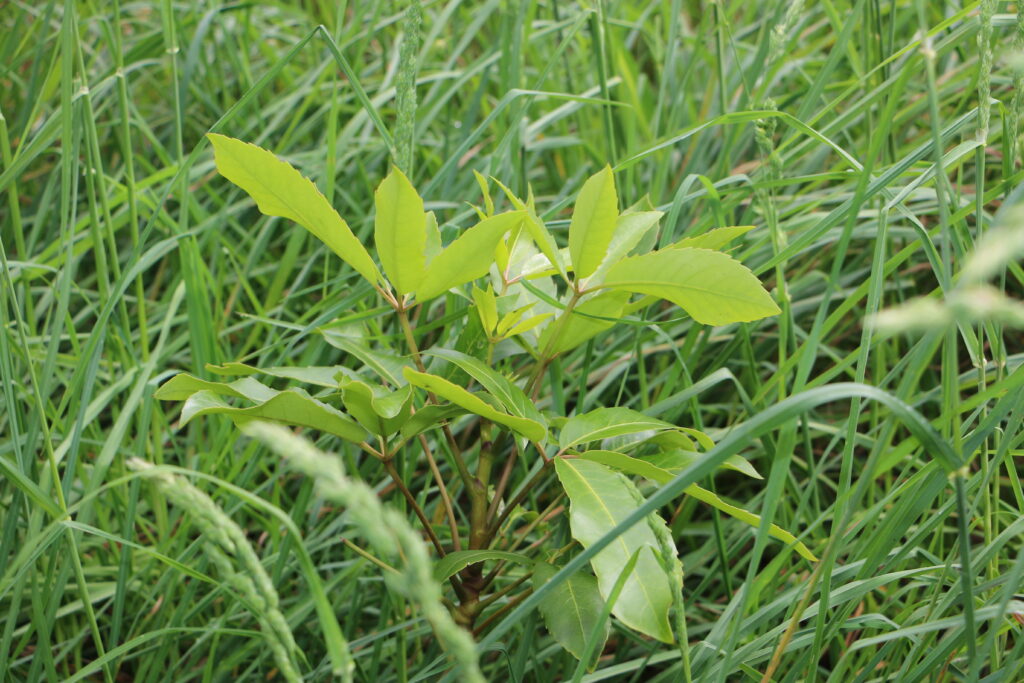
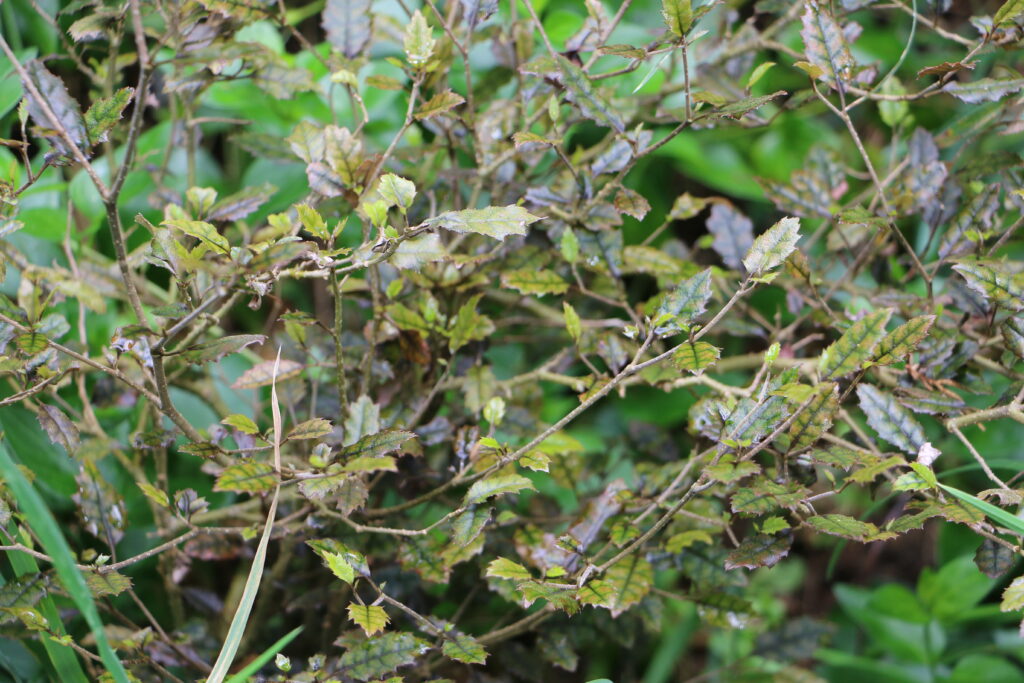
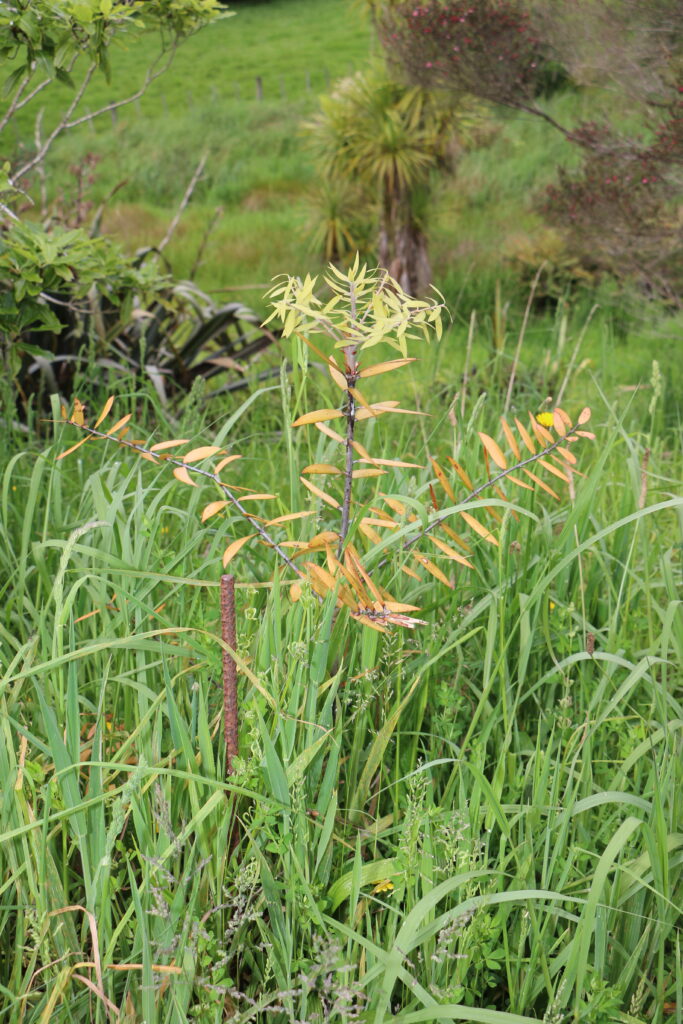
Observing how native plants are faring
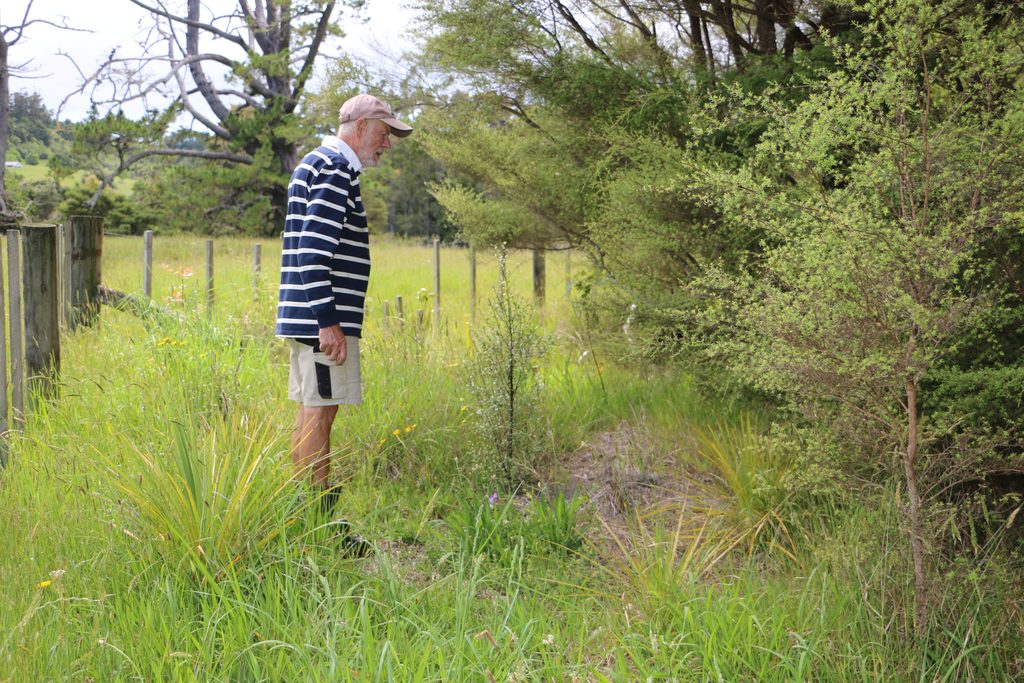
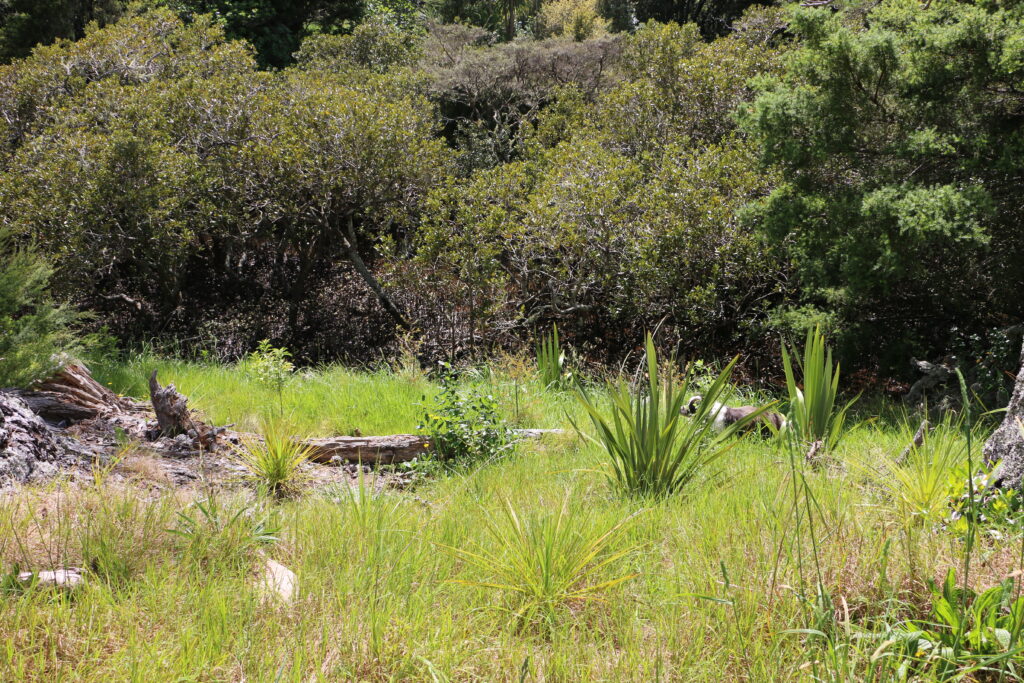
Clive has seen some plants do well, whereas others struggle – sometimes, for no obvious reason.
“The soil conditions here vary considerably and some of the plants really take off and in other areas they don’t do so well. There were a lot of pine trees along the edge of the waterway before they fell or were cut down. All the good minerals had been sucked out of the soil in those places.”
Following the winter planting, December 2025 was the hottest on record and Clive installed a water line to irrigate the planting and had hoses stretching for hundreds of metres.
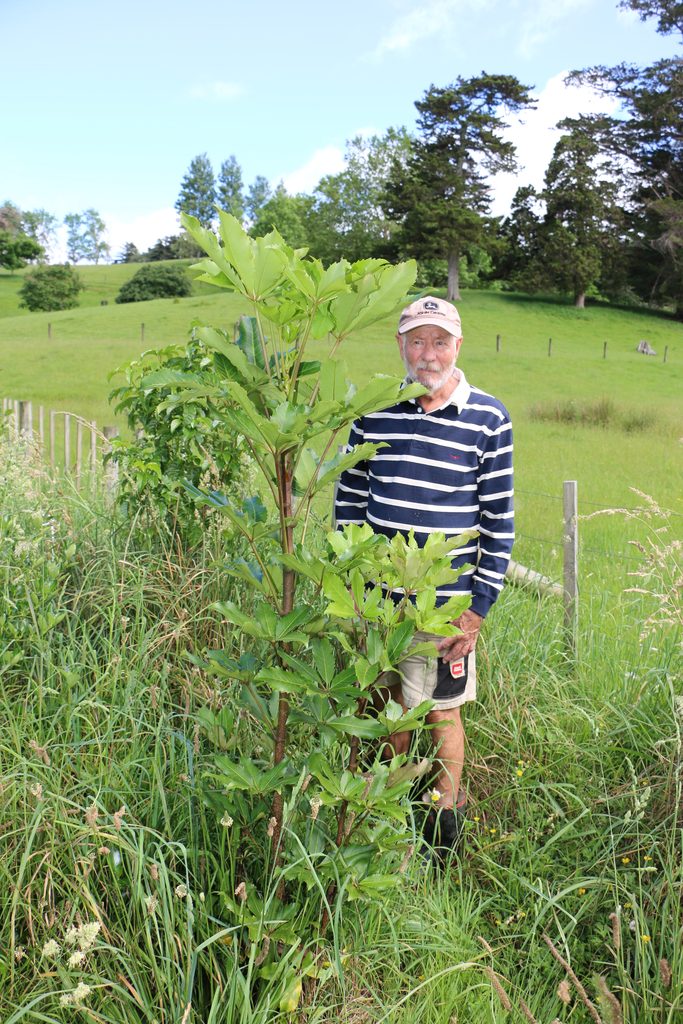
Releasing plants to help survival
The WPF requires recipients to release plants twice following planting. Clive did this himself and finds it worthwhile to leave some grass in the planting area to protect seedlings from the elements and hungry rabbits.
He sent photos to the land advisor so they know the site is being managed correctly and then the final small portion of the funding was paid to him.
Support from Takatu LandCare for funding applications
There are several funding opportunities for restoration projects and when possible, Takatu LandCare can assist with letters of support, completing applications and providing volunteers for planting days.
Auckland Council’s Regional Environment and Natural Heritage (RENH) grant programme is open from mid-November 2026 to early-February 2027 for applications. For more information, email pestfree@aucklandcouncil.govt.nz.
Auckland Council’s Waterway Protection Fund and Making Space for Rural Water Fund will open for applications in late-February 2026. For more information, email ruralwaterways@aucklandcouncil.govt.nz.
Trees For Survival are another great source for planting sites that are suitable for older primary school and secondary school students.