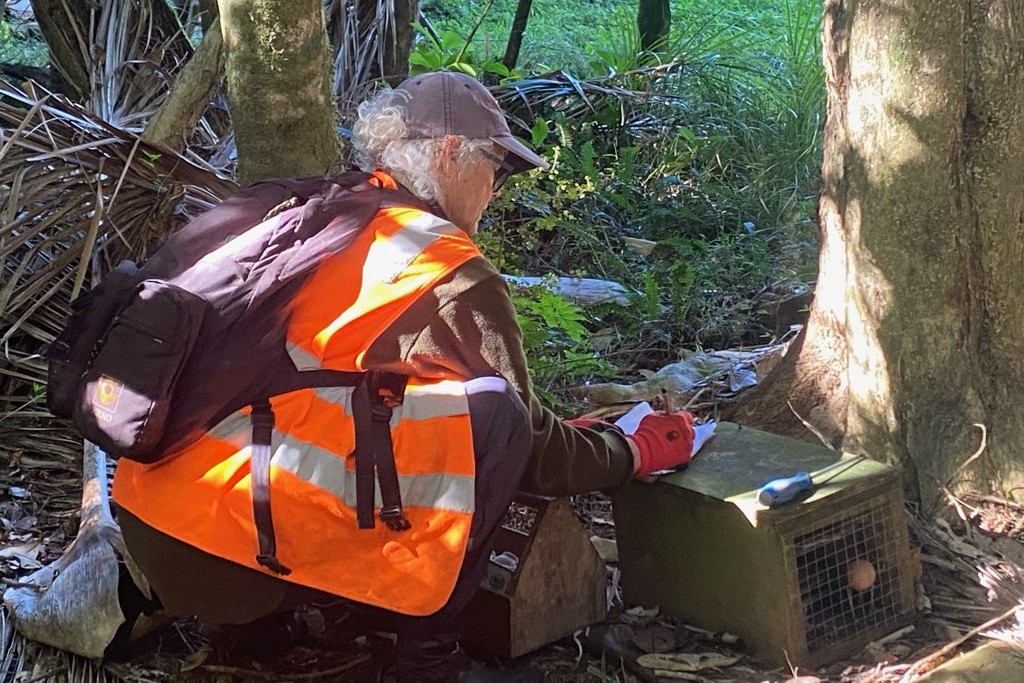
They are everywhere – small patches of native bush called scenic reserve this, that or the other. Along Takatu Road, on the road to Tāwharanui Regional Park, we have our very own mystery block of bush – Wilson Scenic Reserve.
From the road one parcel of Wilson Scenic Reserve is obvious, although it is one of those, blink and you miss it, moments; a sign captures the attention of some motorists and cyclists travelling along the Tāwharanui Peninsula. A second and larger block is downhill to the south-east and is less well-known.
The seven-hectare reserve is officially managed by the Department of Conservation (DoC), but a memorandum of understanding between DoC and Takatu LandCare has empowered Ngaire Wallen to look after the remnant bush since 2020.
The reserve is named after the Wilson’s Cement Works family, which owned the farmland and set aside the two areas of bush reserve.
“Nobody goes there,” says Ngaire. “It’s landlocked by private land so you can’t go there without permission from the farmer, especially with farm health and safety rules.”
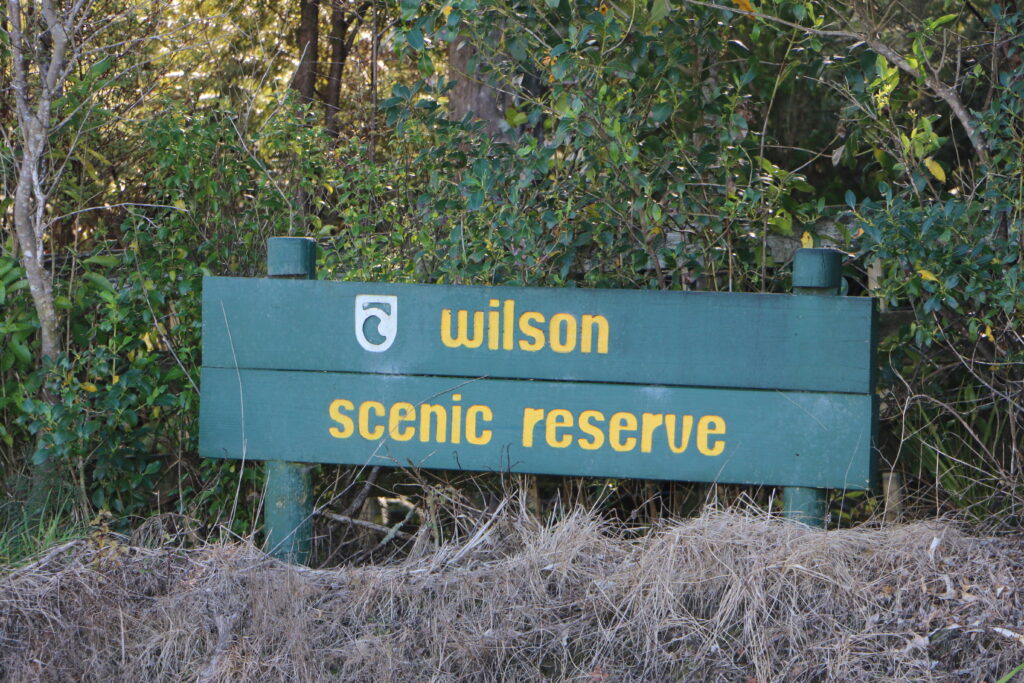
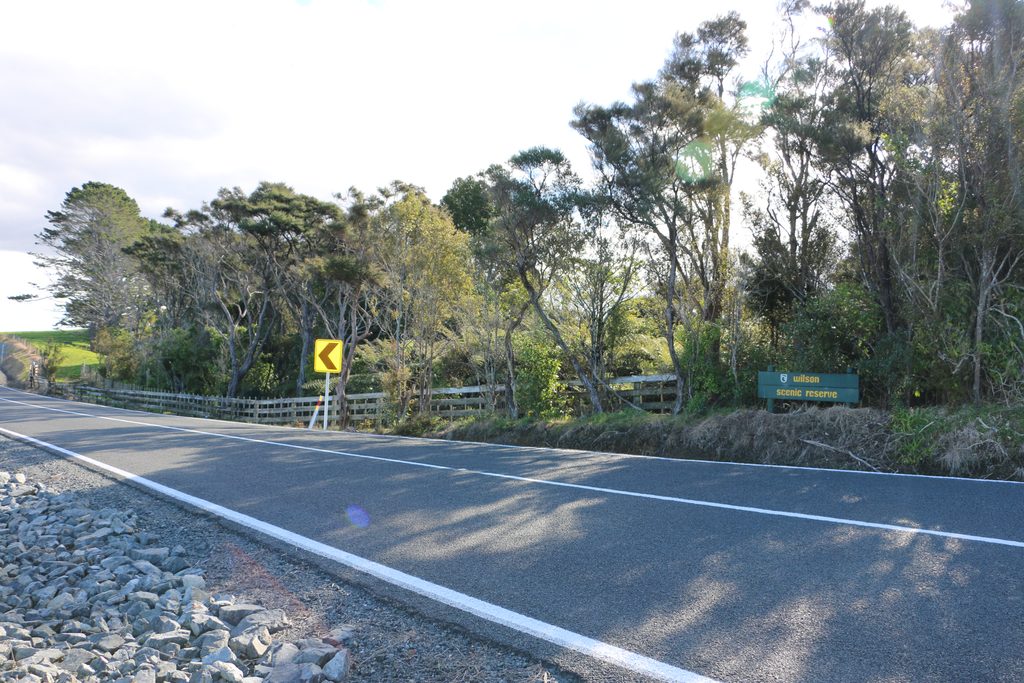
There are no tracks through the Wilson Scenic Reserve and there is no public access.
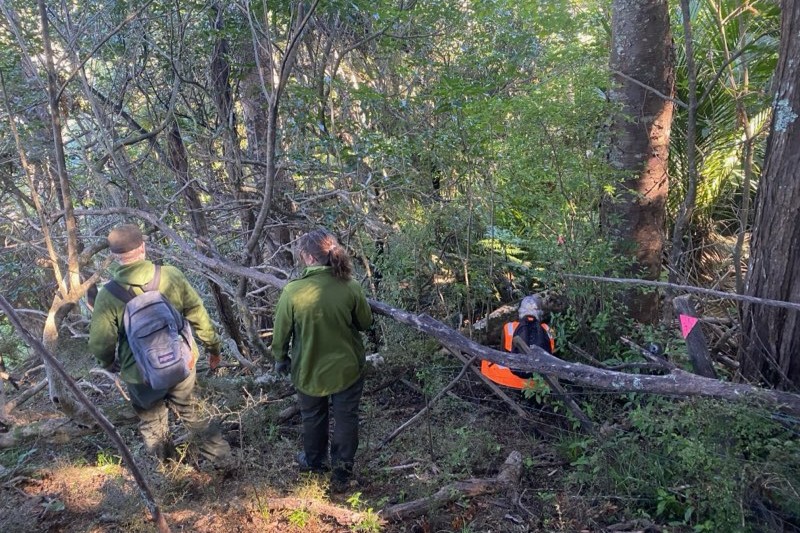
Wilson Scenic Reserve lies in the narrowest stretch of Tāwharanui Peninsula, between the Matakana River and Whangateau Harbour. Water from the roadside block flows down to Tokanui Point and the larger south-eastern block is a tributary to the wetland project that was collaboratively planted by Takatu LandCare and Whangateau Catchment Collective in May 2026.
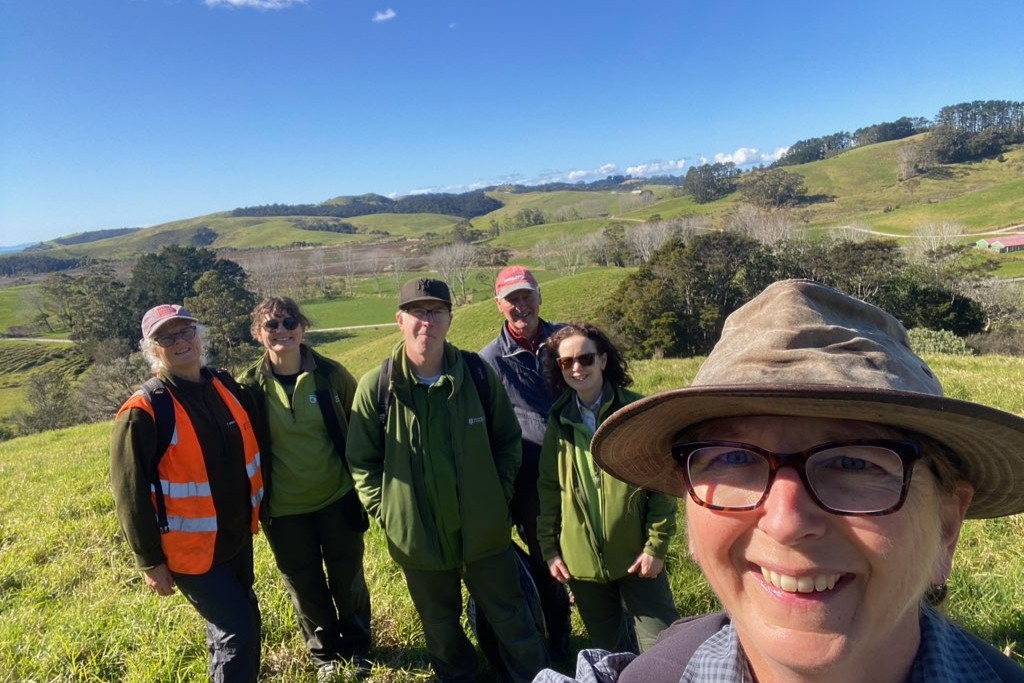
“When I started the trap line, I thought we needed a pest barrier across the peninsula at this point, where it is so narrow.”
Takatu LandCare has adopted this idea and is creating a virtual predator fence in the area with intensive trapping in the narrow zone, within which Wilson Scenic Reserve is located. Takatu LandCare donated most of the traps Ngaire installed around the reserve, which are still in use and DoC contributed Flipping Timmy possum traps.
“I started looking after the trapline as a volunteer and could do it during Covid because I could walk from my home to the reserve.”
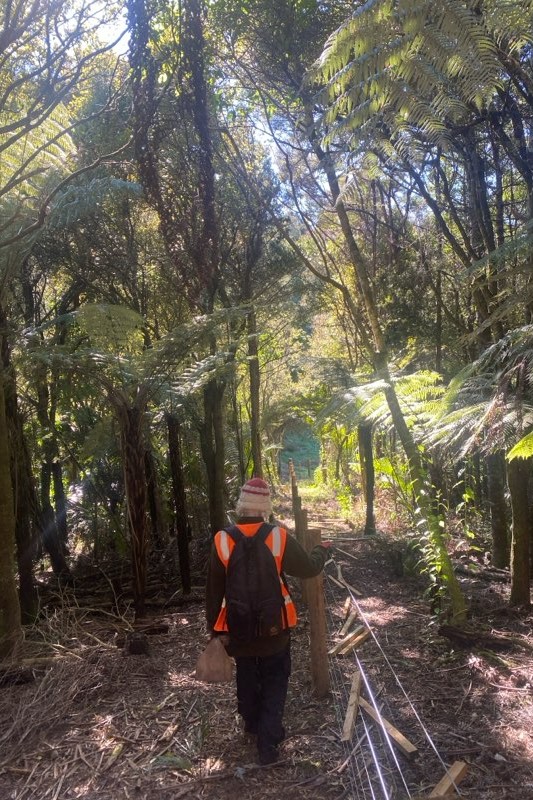
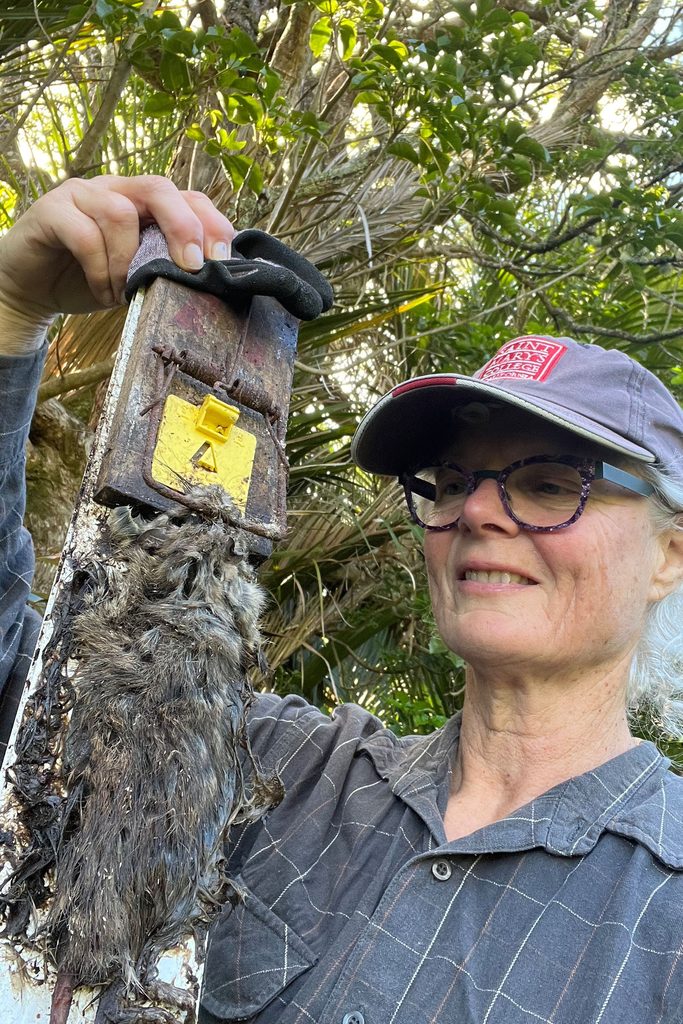
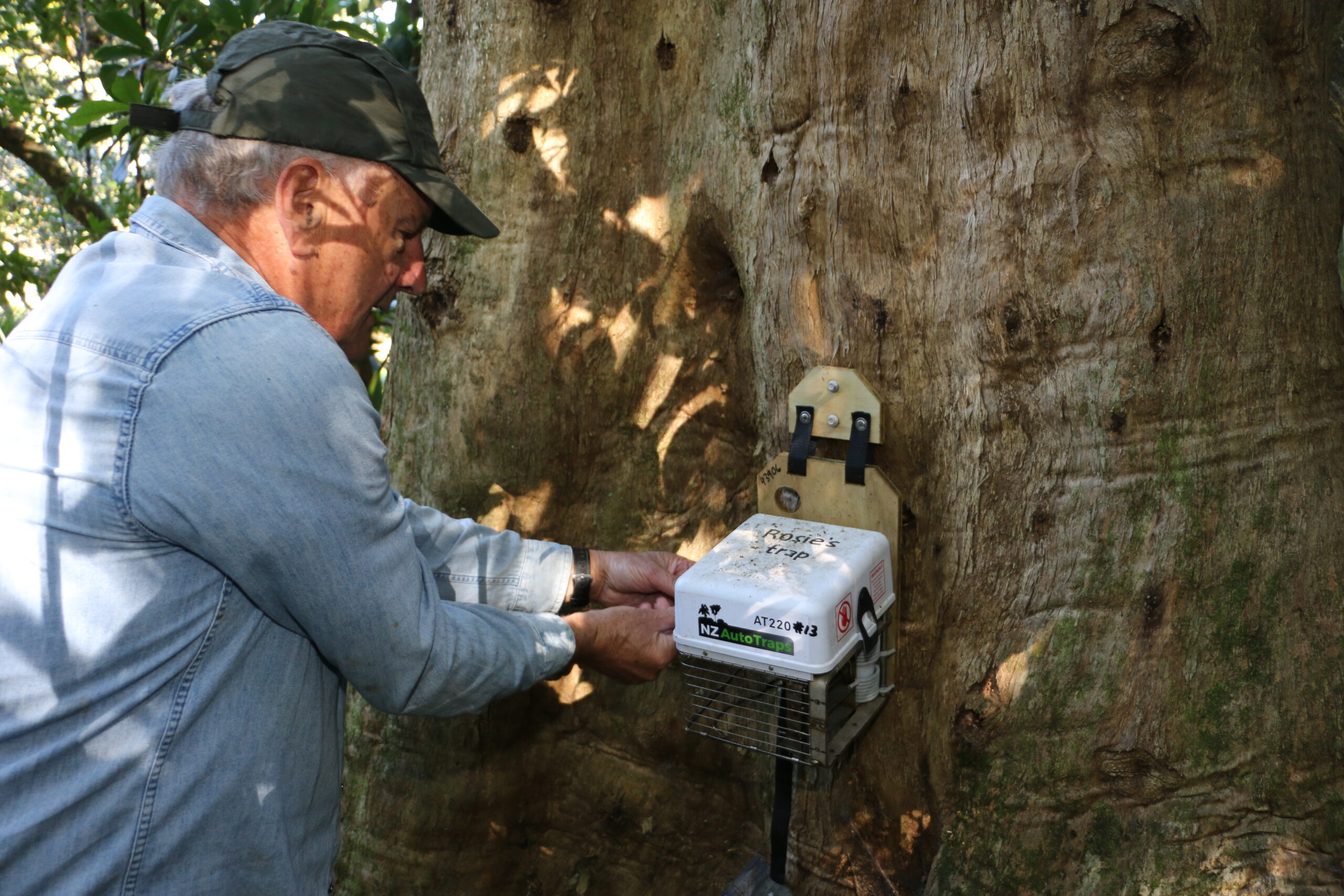
Ngaire likes the autonomy of trapping at the reserve, making decisions about what to use as bait, where to set up traps and when to check the trapline. And, catching plenty of predators keeps her motivated.
She is not allowed to go into the bush and traplines are around the perimeter. The south-eastern reserve has a swamp and after a couple of years she stopped going through the swamp and found an easier track. She follows all protocols to avoid spreading kauri dieback.
To-date she has caught about 750 rats, 60 possums and only a few mustelids.
“It’s my happy place really. When I get to the reserve it’s so lovely to walk around and hopefully have some trapping wins.”
Ngaire Wallen, Takatu LandCare volunteer
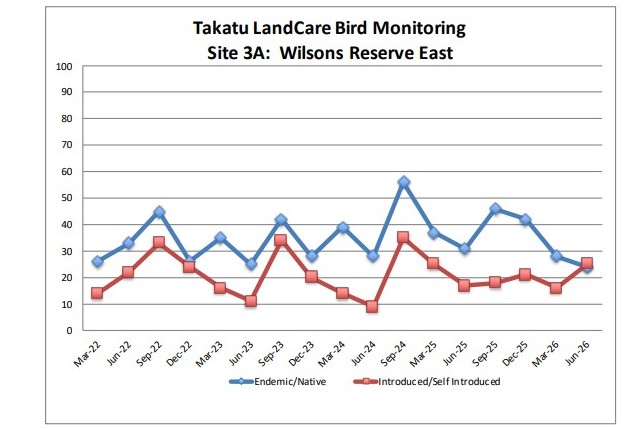
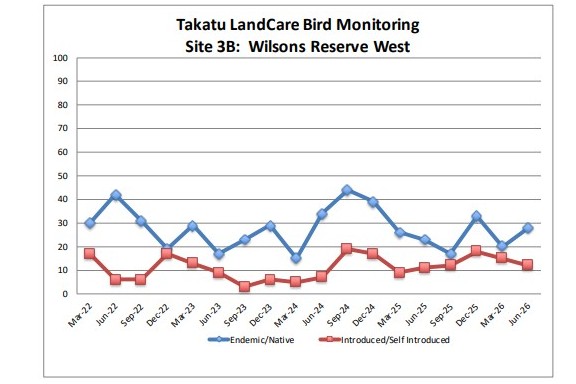
When Ngaire started the predator control contract with Takatu LandCare she started doing bird monitoring at the reserve.
“I thought it would prove how marvellous the trapping was. It hasn’t really proved anything but it’s fun sitting in the bush for 30 minutes counting the birds.”
Quantifying results in a short period of time is a challenge faced by all conservation projects. There can be an expectation that birdlife will boom within a few years but it can take decades, sometimes centuries, to quantify significant environmental changes.
This year, she plans to put out tracking tunnels again to compare with results from previous years. Tracking tunnels will show her the density of pests, which she feels it is decreasing.
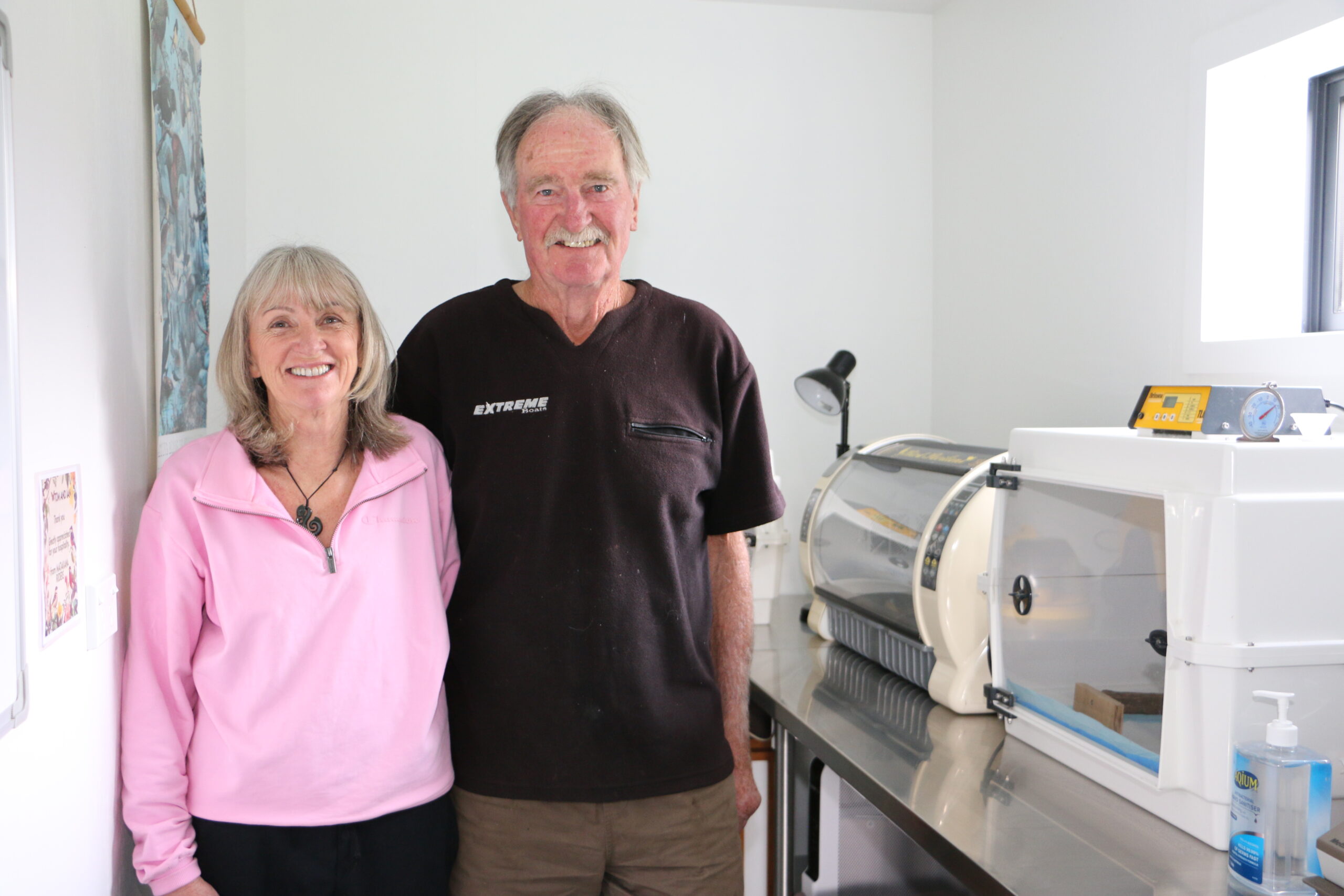
The DoC agreement is up for renewal and recently, staff joined Ngaire, John McIntyre (Takatu LandCare chairperson) and Karen Ward (Takatu LandCare community coordinator) to see how the project is progressing.
They discussed where to next, what Ngaire would like to see to protect Wilson Scenic Reserve. Giving her a sense of ownership of the project keeps her engaged and she says this is important for volunteers.
“With trapping, if you want people to do it – they must have ownership of it. Otherwise, you end up running around after them and that’s not sustainable.”
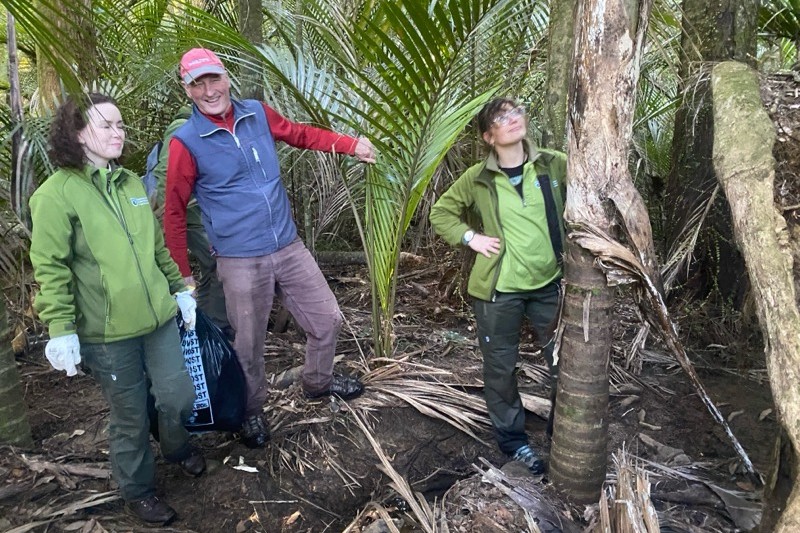
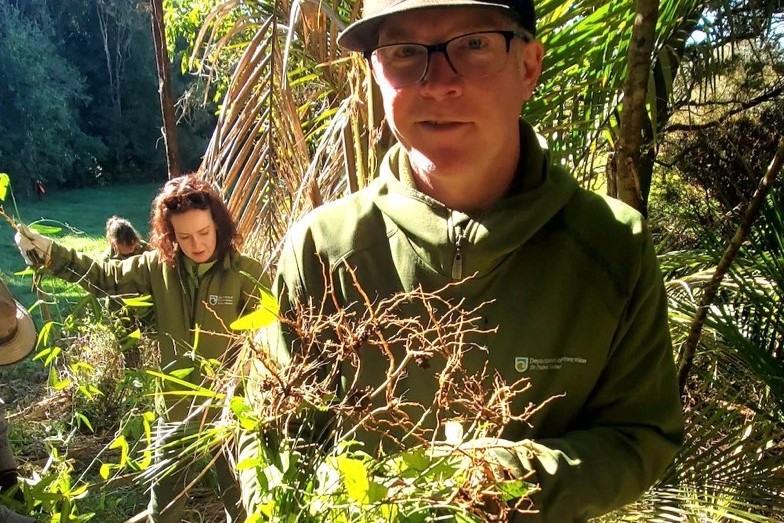
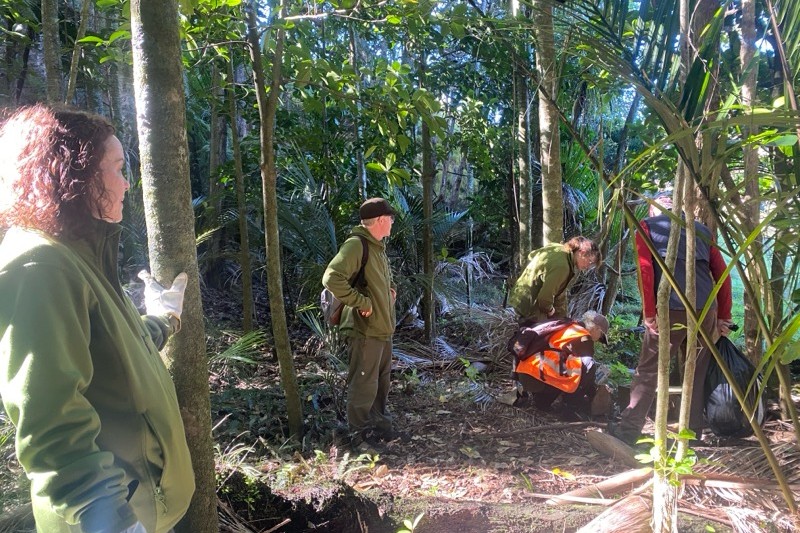
During the DoC visit the team spent time removing bat-wing passionflower, which is spread by birds and animals that could be carrying it from a patch in Jones Road.
“They attacked it with great enthusiasm and dug out most of it.”
From the birds’ perspective Wilson Scenic Reserve is connected to numerous other native bush blocks on Tāwharanui Peninsula.
“I started looking after that land and feel I should keep doing it until I no longer want to. Then I should make sure it’s looked after by someone else who wants to. These are nice little reserves of bush that are connected.
“Pest control is a priority. The birds have got plenty of bush on Tāwharanui Peninsula, but they need to be safe in that bush.”